Product catalogue and storefront
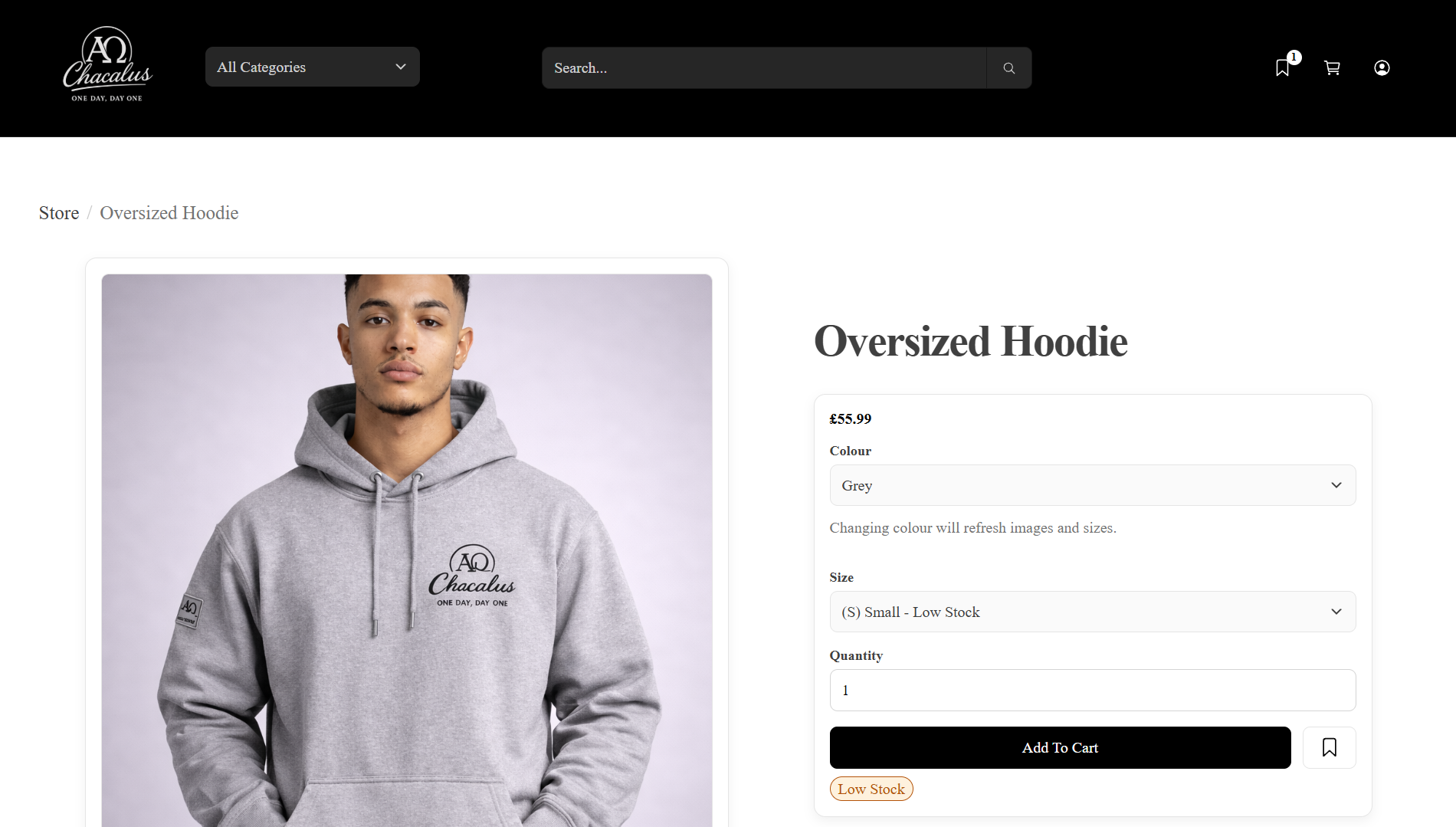
Product variants, colour imagery, specifications, cart and wishlist functionality, stock-state messaging and responsive product browsing.
Discuss operational requirements, architecture and implementation strategy.
Chacalus is an independent UK apparel brand and a founder-associated venture used to develop and demonstrate the commerce infrastructure behind ORM Development. The brief was not simply to publish a storefront: it was to connect the customer journey to the operational systems required to fulfil an order.
For an apparel brand selling products with size and colour variants, a successful checkout is only the beginning. Product availability has to remain accurate, payments must be handled safely, orders need an audit trail, and staff need tools to manage the work after a customer purchases.
The engineering objective was to connect these responsibilities without treating inventory, payments and fulfilment as unrelated features. Chacalus provided a practical environment for designing those workflows around a real brand's intended operations.
Product variants, colour imagery, specifications, cart and wishlist functionality, stock-state messaging and responsive product browsing.
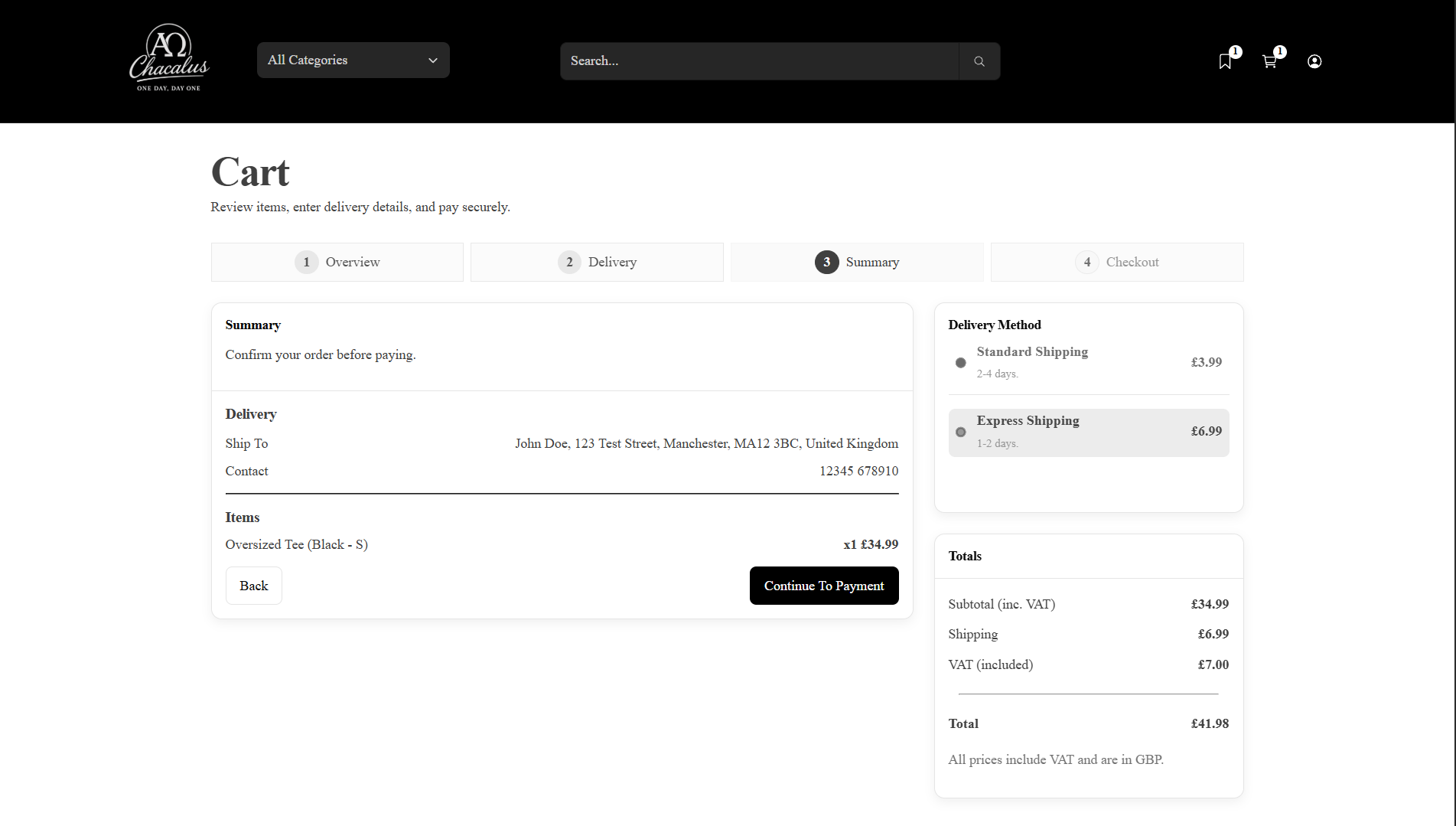
Multi-step checkout, shipping quotations, server-side validation, payment integration, 3D Secure and idempotency controls to help avoid duplicate order effects.
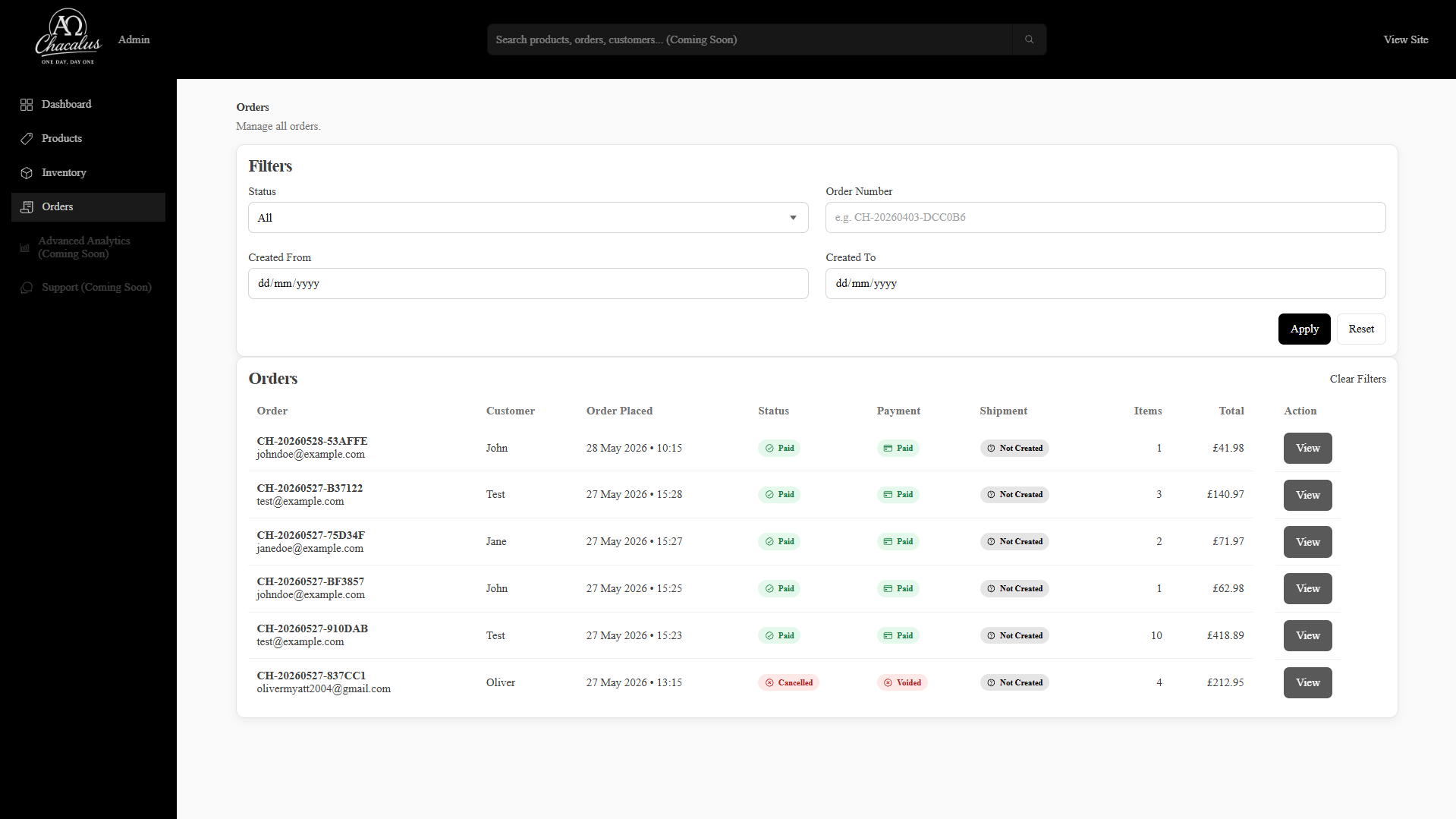
Inventory movements and reservations, order records and status history, administrative order management and shipment creation.
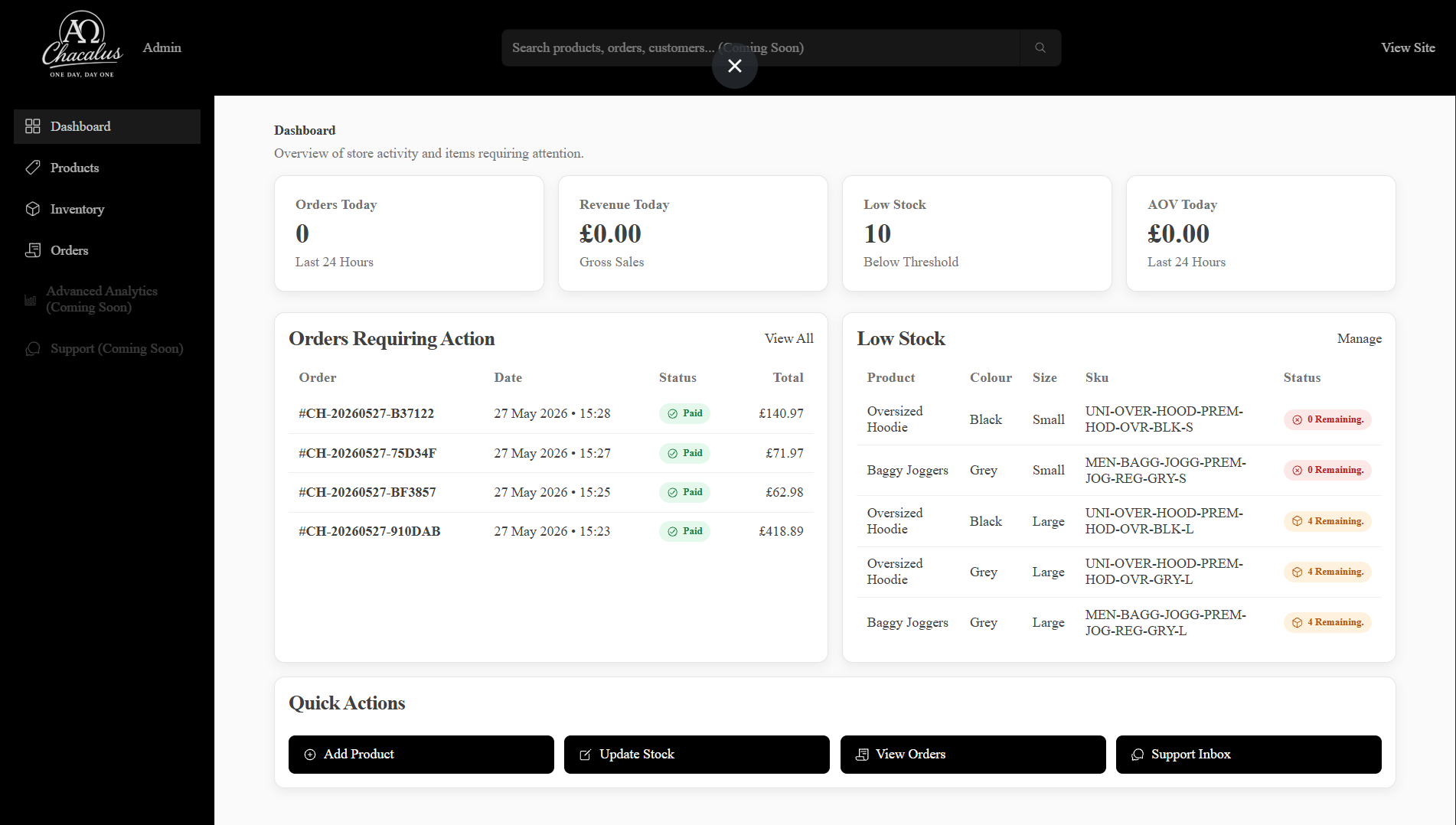
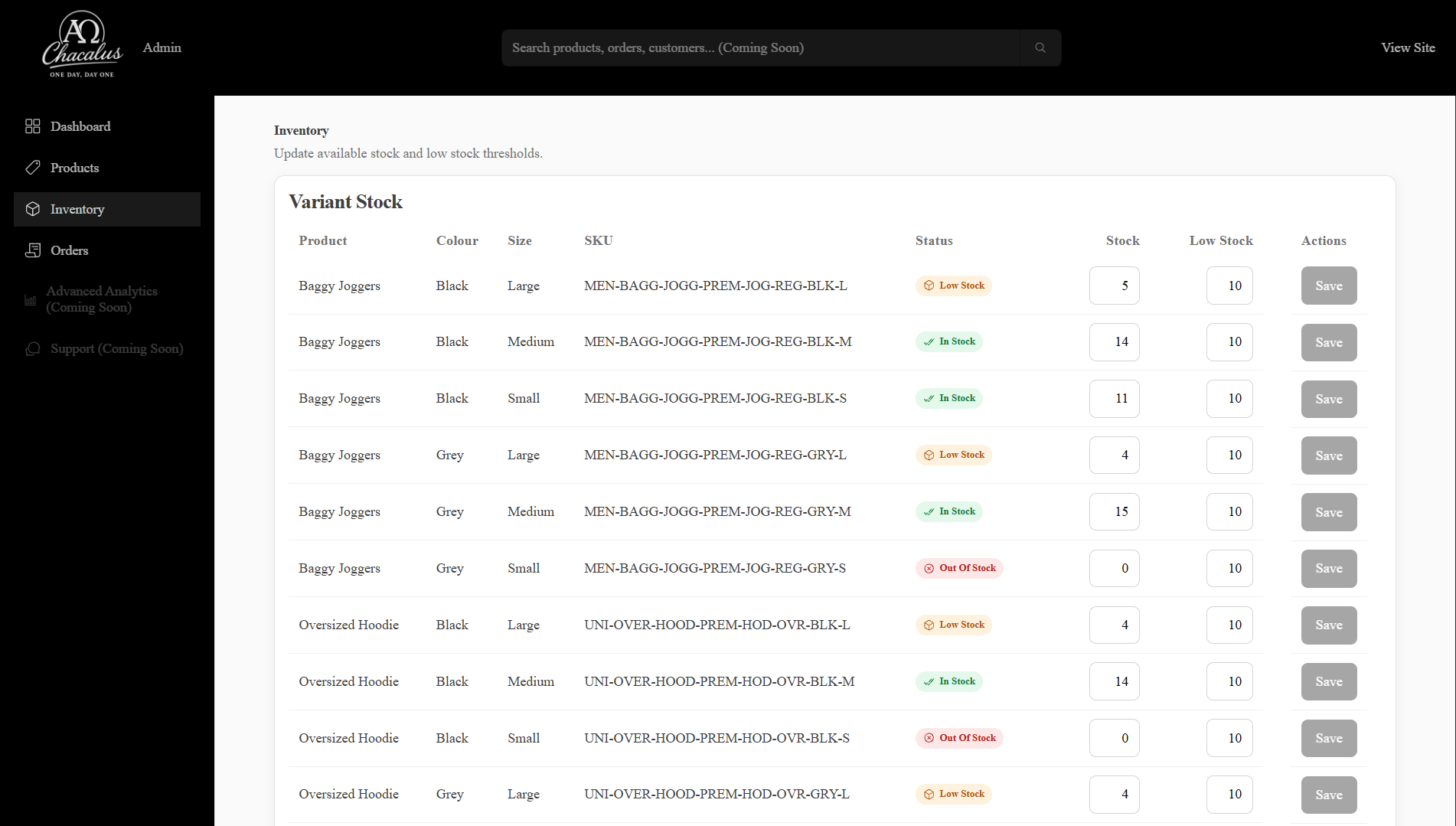
Product and variant editing, inventory administration, order inspection, shipment workflows and operational dashboard metrics.
The implementation uses PHP 8, MySQL and a service-and-repository architecture. Domain boundaries separate core responsibilities such as catalogue management, inventory, checkout, payments, orders and shipments. Composition and application layers coordinate actions across those boundaries.
The distinction is important: the system does not equate a payment result with a completed, reliable order. Checkout and order workflows require explicit state handling, validation and recovery paths.
Reservations and inventory movements provide a record of stock changes and a basis for preventing overselling under competing order activity.
Checkout and payment handling account for retries and duplicate submissions, with transaction boundaries and recovery logic around order creation.
Role-specific guards, CSRF protection, rate limiting, hardened sessions and server-side validation defend sensitive actions.
Separating domain logic from request handling makes business rules easier to validate independently through automated tests.
ORM's Engineering page documents broader testing, performance checks and controlled stress-test results from the commerce infrastructure. Those figures represent particular configurations and test conditions, not a guarantee of identical behaviour for every deployment or business.
This case study documents an implemented software system. It does not claim measured increases in Chacalus revenue, conversion or fulfilment efficiency, and Chacalus is not presented as an independent paying ORM client.
Explore performance and testing methodology →Chacalus demonstrates how customer-facing commerce and operational administration can share a coordinated backend. Its implementation provided the basis for refining reusable commerce capabilities into the framework ORM uses to scope future client deployments.
Each prospective client still requires discovery: business rules, integration needs, infrastructure, testing expectations, ownership and support arrangements vary. The purpose of reuse is to avoid rebuilding sound foundations, not to force every operation into the same configuration.
Explore the implementation packages or discuss the operational requirements behind your project.